
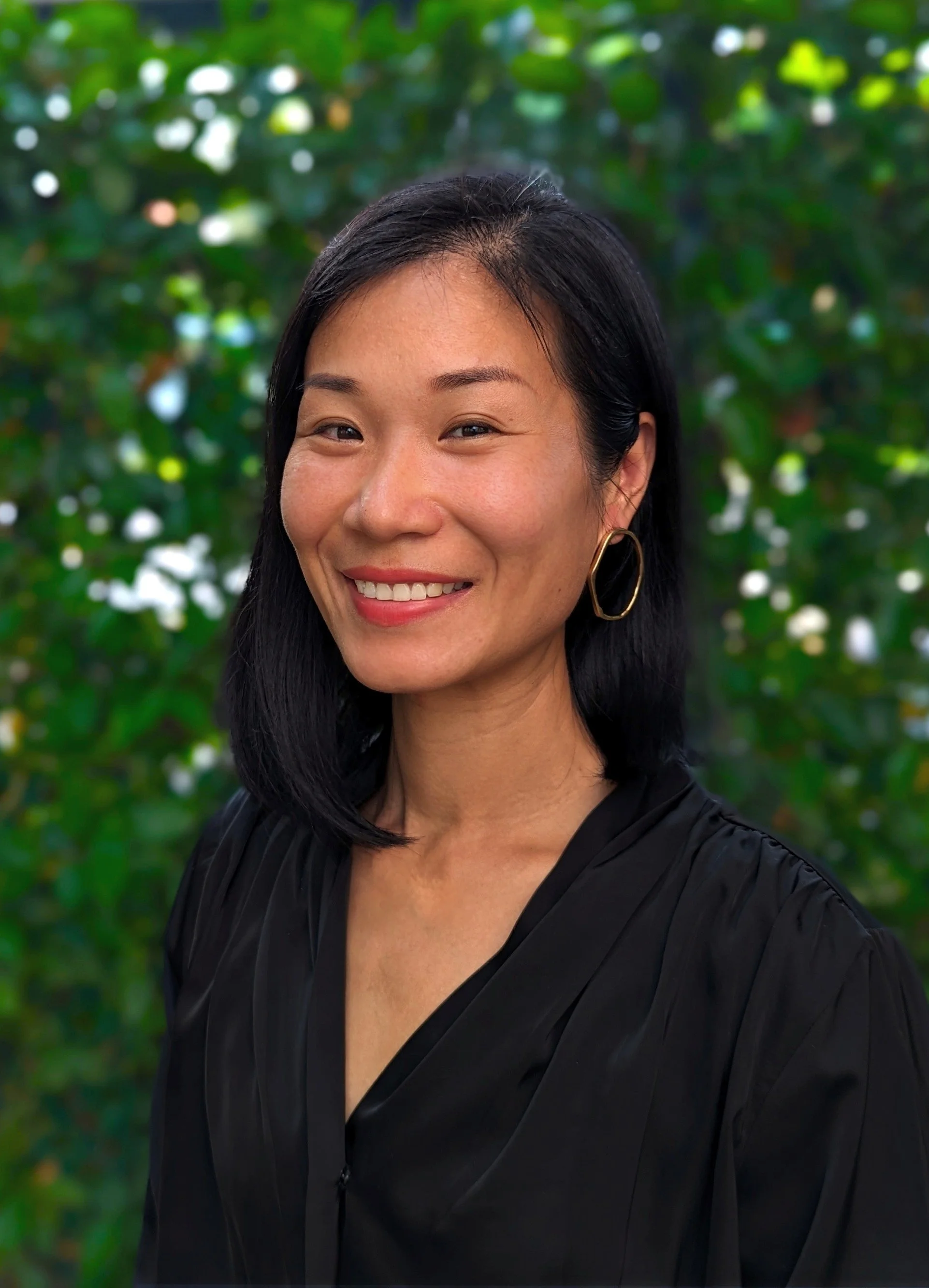
About Shifan
I'm Shifan. I'm a psychotherapist working with adults healing childhood trauma — the kind that surfaces as fragmented parts, intergenerational patterns, or questions about meaning that no achievement has yet been able to answer.
I'm a therapist of my own experience, not of qualifications. I believe a therapist can only take a client as far as the journey she has traveled — which is why I've kept going on my own healing in parallel to the work I do in the room. What I offer didn't come from a textbook. It came from finding my way through it.
My story
I was a good kid — academically driven, quietly disciplined, never one to question the path. Good university, good job, good husband, and good kids.
And then, soon after my second child, something caught up with me. The big questions I had never been asked as a child began to surface — about meaning, about who I actually was, about what I wanted for myself.
I did not have any answers so I pretended everything was fine. My body revealed: two years of insomnia, a persistent cycle of binge eating and excessive exercising that I would only later understand as a flight response. A relentless inner critic. Parts of me at war 24/7 — high-functioning on the outside, fragmented underneath. I divorced in 2017, the year I turned thirty.
What followed was a long apprenticeship in my own healing — individual therapy, meditation retreat, parenting coaching, somatic work, slow learning of how to listen to what my body had been trying to tell me. I came to understand that the symptoms had never been the problem. They were messengers, the only language available to a wounded psyche.
In 2018, the question I had been asking quietly for years finally pushed me into a decision. I trained as a psychotherapist. The pivot wasn't a midlife crisis. It was a careful answer to a quieter question about meaning — one I had finally learned the shape of.
What I believe
Parts aren't destructive. They're shamed.
The critic, the perfectionist, the scared child, the part that won't sleep, the part that binges, the part that performs — they were once helpful. Strategies a younger version of you developed to survive something the people around you couldn't help you carry. Over time, the strategies became maladaptive and the parts holding them were exiled to the basement of the psyche, where they kept doing the only job they knew how to do.
The work isn't to silence those parts or override them. It's to get close enough to bring them home. To meet them with the strength, the steadiness, and the listening they didn't get the first time. When parts come home, they can finally rest. The self — the host — can take the wheel again.
This is why so much of my work happens below the level of talk. The wounds I work with are recorded in implicit memory — in the body, in reflex, in symbol — before language ever arrives. The modalities I trust most are the ones that can reach those places without needing the ego's permission first.
My work is also shaped by existential psychotherapy — particularly Irvin Yalom's view that meaning isn't given to us, it's something we discover — alongside the body-based and expressive traditions I trained in clinically.
Training and memberships
Master of Counselling (Advanced), Swinburne University of Technology, Australia Postgraduate Diploma in Counselling Psychology, College of Allied Educators, Singapore Bachelor of Business Management (Marketing & Operations), Singapore Management University
Certified in EMDR (Eye Movement Desensitization and Reprocessing), Brainspotting, Expressive Therapy and Sandplay
Clinical Member and Registered Counsellor (Membership ID: C0891), Singapore Association for Counselling
Full Member (Membership ID:121), EMDR Singapore